If you searched “Is Gimbels going out of business,” here’s the short answer: it already did — more than 35 years ago. The last Gimbels store closed in early 1988. There is no active Gimbels chain today.
This article covers what Gimbels was, why it failed, how it was wound down, and what its collapse tells us about department store retail. If you’ve seen the name pop up in an old photo or a classic film and wondered whether the brand is still around, this will clear things up.
Gimbels Is Already Gone — Here’s the Direct Answer
Gimbels — formally known as Gimbel Brothers — ceased operations in 1987. The very last store, located in a suburban Pittsburgh mall, closed its doors by January 31, 1988, after losing its lease. That was it.
The chain had once operated 36 stores across several major U.S. cities. By the time that final Pittsburgh location shut down, the rest had already been sold off, converted to other banners, or simply closed. The brand has been defunct ever since.
Any confusion about Gimbels being a current retailer in trouble likely comes from old photographs, the 1947 film Miracle on 34th Street, or general unfamiliarity with how dramatically American retail consolidated during the 1980s. No Gimbels chain is operating today, and none is in the process of closing.
What Gimbels Was and Why It Mattered
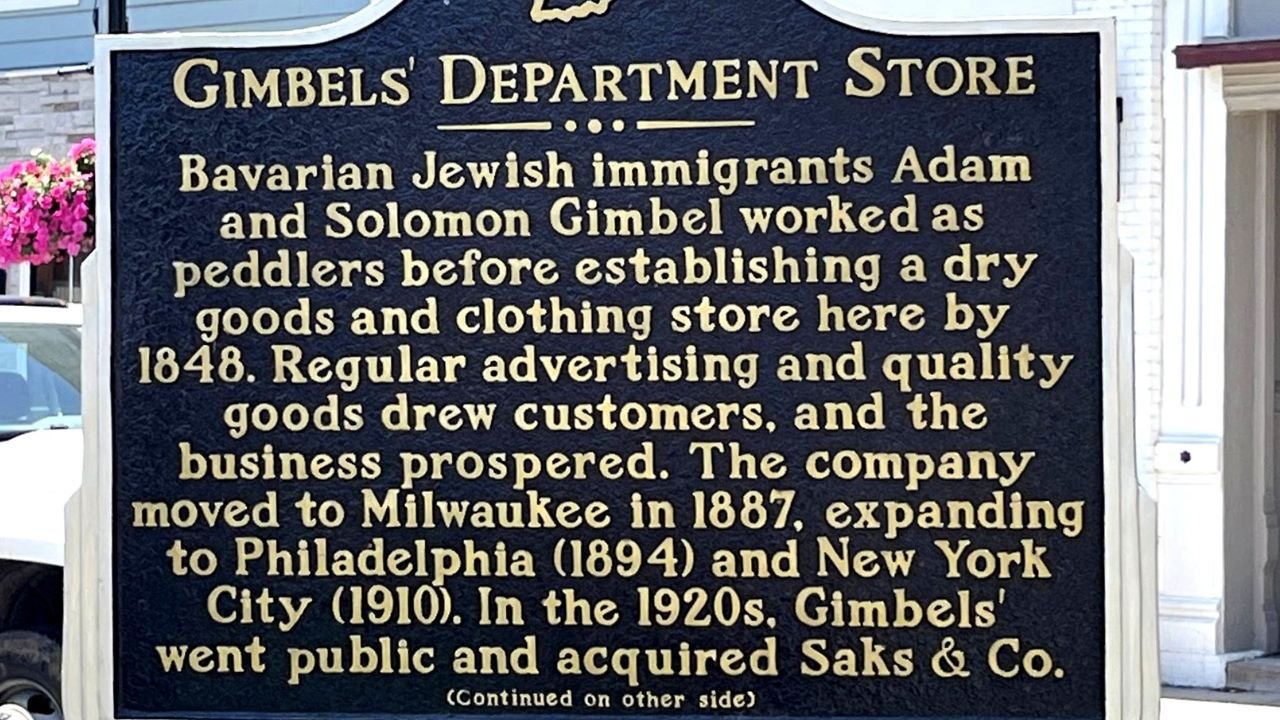
Gimbels was founded in 1842 by Adam Gimbel, a German Jewish immigrant, in Vincennes, Indiana. What started as a small frontier store eventually grew into one of the most recognized department store chains in the country.
By the 1920s, Gimbel Brothers was among the largest and most profitable department store retailers in America. Over its 145-year run, the company employed thousands of workers and sold an estimated $20 billion worth of merchandise. That’s a significant retail operation by any measure.
The chain expanded into major cities — Milwaukee, Philadelphia, Pittsburgh, and New York. The crown jewel was the Herald Square flagship in Manhattan, which opened in 1910. That location put Gimbels directly across from Macy’s, setting the stage for one of American retail’s most famous rivalries.
The Macy’s Rivalry and Why People Still Remember Gimbels
Gimbels built part of its brand identity around being Macy’s direct competitor. Macy’s leaned upmarket. Gimbels positioned itself as the value alternative — the store where everyday shoppers could get a fair deal without the premium price tag.
That rivalry got cemented in American pop culture through the 1947 film Miracle on 34th Street, where the competition between the two stores plays a central role in the plot. Millions of people have seen that film, which is part of why the Gimbels name still registers with audiences today — even though one half of that famous rivalry has been gone since the Reagan administration.
Brand rivalries can outlast the brands themselves. The phrase “Macy’s vs. Gimbels” still gets referenced in retail history discussions, business articles, and nostalgic content. When Gimbels closed its Herald Square store, a Los Angeles Times piece noted that “Macy’s no longer has to keep its secrets from Gimbels.” That line says a lot about how central the rivalry had become to both stores’ identities.
Why Gimbels Failed — The Business Case
Gimbels didn’t collapse overnight. It was a slow decline driven by a combination of bad positioning, ownership problems, and a failure to keep up with where shoppers were going.
Ownership That Didn’t Prioritize the Brand
In 1973, Gimbels was acquired by BATUS Inc., the U.S. arm of British conglomerate B.A.T Industries. Under this ownership, Gimbels was managed more like a portfolio asset than a retail brand with a future. When performance lagged, the priority was divestment — not reinvestment.
In January 1986, BATUS announced plans to exit the entire 36-store Gimbels chain, citing insufficient growth potential. That decision effectively started the countdown to full closure.
A Blurry Brand Identity
A 1986 New York Times case study described Gimbels’ Herald Square location as a “dowdy” retailer with no clear positioning. It wasn’t upscale enough to compete on quality. It wasn’t cheap enough to compete on price. That’s a difficult place to be in a crowded market.
Retailers that get stuck in the middle — not premium, not discount — tend to lose customers from both directions. Gimbels had lost its edge as a value brand without building anything to replace it.
The Wrong Locations at the Wrong Time
Gimbels was heavily concentrated in large downtown flagship stores. But through the 1970s and 1980s, American shoppers were moving to suburban malls. They wanted stores close to home, with easy parking and a comfortable shopping environment.
While Gimbels remained anchored to its big urban locations, consumer traffic in those areas gradually declined. Competitors who had already established themselves in suburban malls were better positioned to capture that shift.
How the Wind-Down Actually Happened
The phase-out was methodical. In May 1986, the New York Times reported that BATUS would sell eight Gimbel stores — a clear signal that the chain was being broken apart rather than restructured. By June 1986, reports confirmed that even the flagship Herald Square store and the Lexington Avenue location would close permanently.
The New York stores didn’t just flip off the lights. They closed briefly to count inventory, then reopened for a 12-week going-out-of-business sale before shutting down for good. That liquidation process is a standard playbook for winding down a major retailer — you monetize whatever stock remains before handing over the real estate.
The closure of the two Manhattan stores alone resulted in approximately 5,000 job losses. For the communities and employees involved, this wasn’t just a business story — it was a significant disruption.
Other Gimbels locations across New York, New Jersey, Pennsylvania, and Milwaukee were sold to other chains. Allied Stores purchased ten locations and converted them to Stern’s or Pomeroy’s banners. Some stores became Marshall Field’s locations. A few were redeveloped entirely. There was no single successor — the chain was simply broken up and absorbed by whoever wanted the individual pieces.
What Gimbels’ Story Reveals About Retail Survival
Gimbels is a useful case study because its failure wasn’t a sudden shock — it was a slow-motion result of compounding problems that went unaddressed for too long.
The chain parallels what we’ve seen more recently with Sears and J.C. Penney. The pattern is similar: a retailer that once dominated its market gets outpaced by format shifts, fails to update its brand positioning, and eventually becomes too costly to save. In Gimbels’ case, the 1980s equivalents of today’s online competitors were suburban mall stores and discount retailers.
For business owners and managers, the Gimbels story highlights a few clear risks:
- Unclear positioning kills brands gradually. If customers can’t articulate why they shop somewhere, they’ll eventually stop.
- Conglomerate ownership often prioritizes exit over turnaround. When a business is a minor asset inside a large holding company, strategic investment is rarely the first response to declining performance.
- Geographic strategy matters. Being in the right locations isn’t just about foot traffic today — it’s about where your customers are heading in five to ten years.
If you’re interested in studying how retail businesses rise and fall, Vision of Business covers practical business strategy with real-world examples like this one.
The Legacy Gimbels Left Behind
Gimbels lives on mostly in cultural memory — through film references, history articles, and the occasional nostalgic piece about New York’s retail past. The original corporation is completely gone. Any modern use of the Gimbels name would be a reference to history, not a continuation of the chain.
What the brand did leave behind is a clear example of how even a 145-year-old institution can fail when it stops adapting. Longevity doesn’t guarantee survival. Neither does name recognition.
The 1947 film that helped make Gimbels famous is still watched every holiday season. But the stores that inspired it have been gone since before many of today’s shoppers were born. That gap between cultural memory and business reality is exactly why the question “Is Gimbels going out of business?” still gets searched online today.
The answer is simple: Gimbels didn’t go out of business recently. It went out of business a long time ago — and the reasons why are still worth understanding.
Also Read:
- Is Geek Bar Going Out Of Business?
- Is U.S. Vision Going Out of Business?
- Is Packard Going Out of Business?