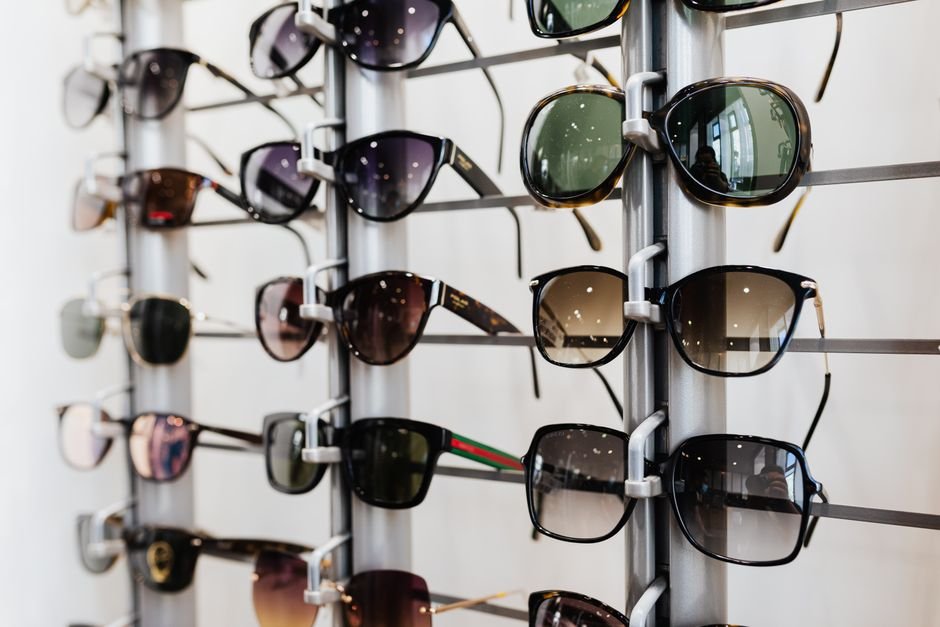
U.S. Vision, once one of the largest optical retail operators in the United States, has shut down all of its store operations nationwide. For many customers and industry observers, the closure came as a surprise. If you had an appointment, a pending order, or simply knew one of its locations, here is a clear breakdown of what happened and what it means.
U.S. Vision Has Officially Ceased All Retail Operations
To answer the question directly: yes, U.S. Vision is out of business. This is not a rumor, a temporary closure, or a rebranding under a new name. The company entered a formal wind-down process and ended all retail operations nationwide by late May 2026.
Eric Bertrand, U.S. Vision’s Managing Director, confirmed this publicly. His statement was straightforward: “all retail operations have ceased” and there would be no operating business going forward. That leaves little room for interpretation.
The shutdown covered more than 200 locations across multiple retail formats. By any standard, this is a significant closure — both in terms of store count and the history behind the brand.
What Closed and When — Standalone Stores and Department Store Locations
U.S. Vision operated in two primary formats. The first was freestanding retail locations. The second was licensed optical departments inside larger retail chains, including JCPenney, Meijer, and Boscov’s.
These formats did not all close on the same day. The licensed departments inside the major retailers closed on separate dates throughout May, which is why some customers may have noticed inconsistent information online depending on which location they visited.
The company was headquartered in Blackwood, New Jersey, and had approximately 670 employees worldwide as of late 2025. While the sources available do not confirm that every employee was terminated on a single date, the cessation of retail operations effectively ended the company’s workforce needs across the board.
The total closure of more than 200 locations makes this one of the more substantial optical retail shutdowns in recent memory, even if the U.S. Vision name was less prominent to everyday consumers than some national chains.
Pending Customer Orders and What Happened to Them
One of the most common concerns after a business closure is whether already-placed orders will actually arrive. In U.S. Vision’s case, the company stated that outstanding orders were still being processed and shipped directly to customers during the wind-down period.
This is worth understanding clearly. A wind-down is not the same as an overnight disappearance. When a business winds down, it works to close out its remaining obligations — including fulfilling orders — before fully ceasing all activity. Closing store doors does not always mean every pending commitment ends that same day.
Think of it this way: a retailer can be out of business even while a few back-end tasks, such as shipping remaining orders, are still being finished. That appears to be what happened here.
If you had an unresolved order, warranty issue, or needed to retrieve prescription records, the practical advice at the time of closure was to use any official contact channels referenced in company communications. Do not assume that a closed store location means your order was lost — fulfillment was being handled separately during the wind-down.
The Optical Lab Sale to Zeiss — What It Does and Does Not Mean
One detail that caused some confusion was the announcement that Zeiss Vision Care acquired U.S. Vision’s optical laboratory in Blackwood, New Jersey. On the surface, that might sound like the company was acquired or that operations would continue under a new owner.
That is not what happened. This was a targeted asset sale — Zeiss purchased a specific facility and its associated assets. It was not a full acquisition of U.S. Vision as a company, and it did not include the retail store network.
Selling individual assets during a wind-down is standard business practice. Companies in this stage often sell equipment, real estate, intellectual property, or operational facilities to recover value for creditors and stakeholders. The lab sale is relevant context for understanding how U.S. Vision’s assets were distributed, but it should not be read as a sign that the retail business has a future.
The stores are closed. The lab was sold. Those are two separate events.
U.S. Vision Is Not the Same as National Vision
Given the similar names and the same industry, it is worth stating this clearly: U.S. Vision and National Vision are two entirely different companies. They have separate ownership, separate store networks, and separate business trajectories.
National Vision is still operating. In fact, it has reported financial results pointing to continued momentum and has announced its own separate store-rationalization plan for fiscal 2026 — which involves closing a specific set of underperforming locations as part of an optimization strategy, not a full shutdown.
If you came across a headline about an optical retailer closing stores and were unsure which company it referred to, the answer is U.S. Vision. National Vision’s situation is meaningfully different, and the two should not be conflated.
Did U.S. Vision File for Bankruptcy?
This question comes up often in cases like this, and it is important to be accurate. The available reporting from Vision Monday and Becker’s ASC Review describes U.S. Vision’s situation as a wind-down and a cessation of retail operations. Neither source confirms that the company filed for bankruptcy.
Wind-downs and bankruptcies are related concepts but not the same thing. A bankruptcy filing is a formal legal process with court involvement. A wind-down can occur outside of bankruptcy when a company chooses — or is compelled — to cease operations and close out its affairs in an orderly way.
Based on the available information, it would not be accurate to label this a bankruptcy. If that status changes and a formal filing is confirmed, that would need to be covered separately with verified sourcing.
A Brief Background on U.S. Vision
U.S. Vision had operated as an optical retailer for many years and was based in Blackwood, New Jersey. The company had previously been associated with Refac Optical Group in its ownership history and was characterized in company profiles as an operating subsidiary within the optical retail space.
Its business model — running both standalone locations and licensed departments inside established department store chains — gave it a broad footprint without requiring a single unified brand identity. That model worked well in an era when department store traffic was strong, but the long-term decline of department store retail likely created meaningful headwinds over time.
Still, the available reporting does not point to a single confirmed cause for the shutdown, and it would be speculative to assign one. What is confirmed is the outcome: all retail operations have ended.
What This Means for Optical Retail More Broadly
U.S. Vision’s closure is notable, but it does not signal a collapse of the optical retail industry as a whole. Other retailers in the space continue to operate, and the demand for vision care services remains steady given that a significant portion of the U.S. population requires corrective lenses.
For a broader perspective on how businesses in this space are navigating change, Vision of Business covers retail strategy, industry trends, and business developments across multiple sectors.
The closure does, however, highlight the ongoing pressure facing mid-tier specialty retailers — particularly those with heavy exposure to department store partnerships. As anchor tenants in malls and department stores continue to struggle, the optical departments housed within them face shared consequences.
The Bottom Line
U.S. Vision is out of business. All retail locations — more than 200 across the country — have closed. The company’s Managing Director confirmed that no operating business will continue going forward.
Pending customer orders were being fulfilled during the wind-down period, and an optical laboratory asset was sold to Zeiss Vision Care. Neither of those facts changes the core outcome for the retail operation.
If you had a relationship with a U.S. Vision location, the practical steps are to secure any prescription records you may need, follow up on any outstanding orders through official channels, and transition to another provider for future vision care needs. The business, in its retail form, is no longer there to return to.
Also Read:
- Is Bath & Body Works Going Out Of Business?
- Is Greenway Health Going Out Of Business?
- Is Geek Bar Going Out Of Business?