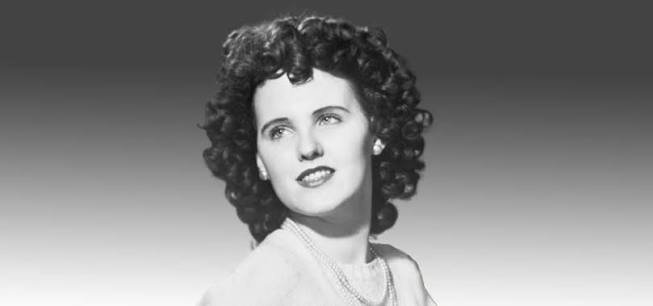
Most people who search for Phoebe Mae Short get there through one of America’s most infamous unsolved crimes — the 1947 murder of her daughter Elizabeth Short, known in headlines as the Black Dahlia. Phoebe herself was not a public figure. She had no celebrity career and left behind no major public record of her own.
But her name keeps appearing in genealogy databases, true crime research, and historical records connected to the case. This article covers who Phoebe Mae Short was, what is reliably known about her family and background, and how she figures into the documented history surrounding Elizabeth’s death.
Who Phoebe Mae Short Was
Phoebe Mae Short was a private individual whose historical relevance comes almost entirely from being Elizabeth Short’s mother. She was not an entertainer, a politician, or a public personality in any documented sense.
According to her Geni genealogy profile, her maiden name was Sawyer. That same profile lists her birth date as July 2, 1897, and her birthplace as Washington, Knox County, Maine. These details come from a user-contributed family-tree database, so they should be treated as genealogy-record information — useful as a research starting point, but not the same as a verified vital record.
Her name surfaces in searches primarily because of family-tree databases and research into the Black Dahlia case. She does not appear to have an independent public biography beyond that connection.
Her Marriage and Five Daughters
Phoebe married Cleo Alvin Short. Together, they are listed in family records as the parents of five daughters: Elizabeth, Virginia, Dorothea, Elnora, and Muriel.
Elizabeth Short was born on July 29, 1924, in the Hyde Park section of Boston, Massachusetts. Biographical sources generally describe her as the third of the five daughters. That places her in the middle of the family, with older and younger sisters on both sides.
Some secondary accounts suggest that Cleo Short left the family around 1930, leaving Phoebe to raise the five girls on her own. This detail has been repeated in multiple sources, but the underlying primary documentation for it is not firmly established in available records. It is worth noting without stating it as settled fact.
The basic family structure, as drawn from genealogy and biographical sources, is straightforward: Phoebe Mae Short and Cleo Short had five daughters, with Elizabeth being the third.
Phoebe’s Life Before Elizabeth’s Murder
Not much is documented about Phoebe’s everyday life in the years before 1947. Available sources place her in Medford, Massachusetts, during the period leading up to Elizabeth’s death. Beyond that, the record is thin.
There is no known public career associated with Phoebe. Her occupation, finances, and daily routine during this period are not described in reliable sources and should not be assumed or filled in with guesswork.
This is worth being honest about. Genealogy profiles — the kind found on platforms like Geni or MyHeritage — can identify names, relationships, and approximate dates. They can point a researcher in the right direction. But a user-submitted family tree functions more like a research lead than a legal document. Important claims within those profiles need to be checked against census records, newspaper archives, obituaries, or official vital records before being treated as confirmed fact.
When it comes to Phoebe’s life before January 1947, what can be said confidently is limited: she was a mother of five daughters, she appears to have been living in Medford, Massachusetts, and she had no documented public profile of her own.
Phoebe’s Response After Elizabeth’s Death
The most historically documented moment connected to Phoebe is her response to her daughter’s murder in January 1947.
Elizabeth Short’s body was discovered in Los Angeles on January 15, 1947. The crime drew enormous press coverage almost immediately. It became one of the most widely reported and analyzed murders in American history, generating decades of books, films, and competing theories — none of which has led to an officially accepted resolution.
Contemporary reporting reproduced by the Los Angeles Daily Mirror archive describes Phoebe traveling from Medford, Massachusetts, to Los Angeles after Elizabeth’s death. According to that archived material, Phoebe initially declined to view Elizabeth’s body. She later asked attendants to uncover it. That detail — the shift from refusal to a quiet request — reflects both the weight of the moment and Phoebe’s documented presence in the case record.
Some accounts also report that members of the press initially told Phoebe that Elizabeth had won a beauty contest, before revealing the truth about her daughter’s death. This detail has been repeated in multiple secondary sources and is emotionally significant. However, it should be presented as a reported account. A confirmed contemporary newspaper source establishing it as fact has not been clearly identified in available research.
What is clear from archived reporting is that Phoebe was present in Los Angeles, that she engaged with the case in the immediate aftermath, and that her name appeared in contemporaneous press coverage connected to Elizabeth’s murder.
Phoebe’s Later Life
The same Geni genealogy profile that lists Phoebe’s birth details gives her death date as March 1, 1992, at age 94, in Vero Beach, Florida. If accurate, that would mean Phoebe lived for 45 years after Elizabeth’s death.
As with her birth information, this detail comes from a user-contributed genealogy database. It has not been confirmed against an obituary, official death record, or comparable archival source in the material available. It is included here as genealogy-record data, not as a verified biographical fact.
Beyond this entry, there is no documented public record of Phoebe’s later years — no interviews, no public statements, and no independently published account of her life after 1947.
Why Phoebe’s Name Appears in Searches Today
Phoebe Mae Short continues to appear in searches for a straightforward reason: interest in Elizabeth Short’s case has never fully faded. Researchers, genealogists, true crime readers, and journalists periodically revisit the Black Dahlia story, and that research naturally extends to Elizabeth’s family background.
When someone builds a family tree connected to Elizabeth Short, Phoebe’s name appears as her mother. When someone reads a biographical summary of Elizabeth, Phoebe is mentioned as a parent. That is how a private person with no public career ends up with a genealogy profile that attracts consistent search traffic.
It is also worth understanding what genealogy profiles can and cannot do. They are genuinely useful for establishing family relationships, approximate dates, and geographic connections. But they should not be read as authoritative biographical records. Errors, duplicate entries, and unverified details are common on collaborative family-tree platforms. For anyone researching Phoebe Mae Short seriously, the genealogy profiles are a starting point, not a finishing line.
For broader context on how family history and public records intersect in biographical research, Vision of Business covers topics relevant to public figures and historical research.
What Phoebe’s Story Tells Us
Phoebe Mae Short’s biography functions as a family doorway into the Black Dahlia story. It provides context — who Elizabeth was, where she came from, what her family structure looked like — but it does not explain what happened to Elizabeth or why.
Phoebe was a mother who raised five daughters, who appears to have done so largely on her own after the mid-1930s, and who outlived one of those daughters under extraordinarily difficult and public circumstances. Her documented connection to the historical record is real, even if the details of her private life remain largely out of reach.
The murder of Elizabeth Short remains officially unsolved. Many theories have been proposed over the decades, and renewed interest periodically emerges as writers, researchers, and investigators revisit the evidence. But no theory has been confirmed, and no suspect has been officially charged.
Phoebe Mae Short deserves to be understood clearly: as a private person, as a mother, and as a figure whose name carries historical weight because of her connection to one of America’s most enduring cold cases — not because of any fame she sought or held on her own.
Also Read: