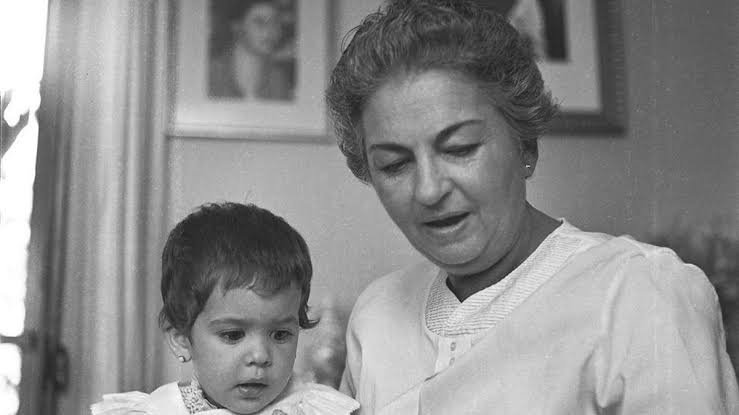
Most people who follow Frida Kahlo’s life know her sisters Cristina and Matilde. Some may even know the broad outline of her complicated childhood. But fewer know that Frida also had two older paternal half-sisters from her father’s first marriage. Maria Luisa Kahlo Cardena was one of them.
She never became a public figure. Her name appears mainly in family trees, genealogy databases, and footnotes within Frida Kahlo biographies. Still, understanding who she was helps fill in a piece of the Kahlo family story that often gets overlooked.
This article covers who Maria Luisa was, how she fit into Guillermo Kahlo’s two families, what is reliably documented about her life, and why so little is known about her compared to her famous half-sister.
Who Was Maria Luisa Kahlo Cardena?
Maria Luisa Kahlo Cardena was the daughter of Guillermo Kahlo and his first wife, María Cardeña. That makes her Frida Kahlo’s paternal half-sister — they shared a biological father but had different mothers.
This distinction matters. Some sources call her Frida’s “stepsister,” but that label is not quite right. A stepsister would mean the two were connected only through a parent’s marriage, without sharing blood. Because both Maria Luisa and Frida had Guillermo Kahlo as their biological father, “paternal half-sister” is the accurate term.
Her name appears with several variant spellings across different sources: Cardeña, Cardena, and Cardeña Espiña. These are likely regional or clerical variations rather than separate identities. The Museo Frida Kahlo’s official biographical materials confirm that Guillermo’s first marriage to María Cardeña produced two daughters: María Luisa and Margarita.
Guillermo Kahlo’s Two Families
To understand Maria Luisa’s place in Frida’s life, it helps to look at how Guillermo Kahlo’s family was structured.
Guillermo Kahlo first married María Cardeña. Together, they had two daughters: Maria Luisa, with a commonly reported birth date of September 9, 1894, and a younger daughter, Margarita. Tragically, María Cardeña died during or shortly after the birth of Margarita, leaving Guillermo a widower with two very young children.
Guillermo later married Matilde Calderón. With his second wife, he had four more daughters: Matilde, Adriana, Frida, and Cristina. This second marriage is the one most people associate with Guillermo Kahlo because it is the family that raised Frida.
Here is the simplest way to see the full picture:
- Guillermo Kahlo + María Cardeña → María Luisa and Margarita
- Guillermo Kahlo + Matilde Calderón → Matilde, Adriana, Frida, and Cristina
This structure is confirmed by the Museo Frida Kahlo’s official biography materials and the Frida Kahlo Foundation’s published biography. It places Frida as one of Maria Luisa’s younger paternal half-sisters, not her full sister.
What Happened After Their Mother Died
After María Cardeña’s death, Guillermo eventually remarried and built a second family. The key question for Maria Luisa’s early life is: where did she and Margarita go?
Several secondary sources, including Wikipedia’s Frida Kahlo article and sites such as Legit.ng and Mentalitch, report that Maria Luisa and Margarita were raised in a convent following Guillermo’s remarriage. If accurate, this would mean the two half-sisters did not grow up in the same household as Frida.
It is worth being clear about the evidence here. The Museo Frida Kahlo’s official materials confirm the family structure and the identities of Guillermo’s daughters, but they do not explicitly state the convent detail. No publicly cited primary record — such as a church register or civil document — has been pointed to as direct confirmation. The convent claim is plausible family context, but it should be understood as a reported detail rather than a fully verified historical fact.
What is less disputed is the broader outcome: Maria Luisa and Frida appear to have grown up in separate households, shaped by the consequences of their mother’s early death and their father’s remarriage.
Maria Luisa’s Adult Life — What Secondary Sources Report
Because Maria Luisa was never a public figure, the biographical details available about her adult life come mainly from genealogy-oriented sources rather than from institutional or archival records. These details are worth sharing, but they carry that caveat.
Marriage
Secondary sources report that Maria Luisa married a man named José Jesús Escanes in April 1917, reportedly when she was around 22 years old. This detail appears across several websites, though it is not confirmed by a publicly cited original document such as a church marriage record or civil registry entry.
Children
The same genealogy-oriented sources state that Maria Luisa and her husband had no children. The article will not speculate about the reasons for this. The available information simply notes it as a reported biographical detail.
Later Life and Death
Secondary sources commonly report that Maria Luisa died on January 19, 1989, at approximately 94 years of age, in the Mexico City area. If accurate, this means she outlived Frida Kahlo by nearly 35 years. Frida died in 1954.
Again, these details come from genealogy sources and secondary biographies rather than from official museum or archival documentation. They are presented here as reported information, not as fully verified public biography.
Why Is So Little Known About Her?
This is probably the most common question readers have after learning that Maria Luisa existed. The short answer is that she did not become a public figure.
Frida Kahlo became one of the most written-about artists of the twentieth century. Her life, her work, her relationships, and her letters have been analyzed in thousands of books, documentaries, and articles. When someone is that well documented, even people on the edges of their life — family members, friends, neighbors — can find their way into the historical record.
Maria Luisa did not have that kind of public presence. She was a private person in early twentieth-century Mexico. If she and Margarita were raised in a convent and then lived ordinary private lives, there would have been few occasions for their names to appear in newspapers, exhibition catalogs, published correspondence, or other documents that historians typically use.
The relative silence around Maria Luisa does not suggest anything dramatic. It mainly reflects what happens when a private person lives outside the spotlight, even when their family includes someone famous. For a broader look at how family and background shape a public figure’s story, resources like Vision of Business explore context and biography in useful ways.
It is also worth noting that some online articles about Maria Luisa appear to repeat the same small set of genealogical details without citing original sources. Readers who encounter very specific claims about her personality, her relationship with Frida, or her inner life should approach those with caution. The confirmed record is thin, and filling it in with invented detail does a disservice to the history.
How She Fits Into Frida Kahlo’s Story
Maria Luisa’s place in Frida’s biography is primarily genealogical and contextual. She helps explain that Frida grew up in a blended family — one shaped by death, remarriage, and the realities of early twentieth-century Catholic family life in Mexico.
Frida was not raised as an only child or even as the eldest daughter. She was one of six daughters across two marriages, born into a household that already carried the history of loss. Understanding that gives a slightly fuller picture of the family environment around her.
It would be an overstatement to say Maria Luisa directly influenced Frida’s art or public identity. The available sources do not support that claim. What they do confirm is that she was a real person, a blood relative, and part of a family story that is often told only from Frida’s point of view.
A Quiet Life Connected to a Famous Name
Maria Luisa Kahlo Cardena lived most of her life far from public attention. She was born in 1894 as the first daughter of Guillermo Kahlo and his first wife. She lost her mother early, grew up separately from Frida’s household, reportedly married in 1917, and — according to secondary sources — lived into her nineties before dying in 1989.
She was Frida Kahlo’s paternal half-sister. That is the most accurate and important thing to know about how the two were related. Beyond that, the confirmed record is limited, and honest reporting means saying so rather than filling the gaps with speculation.
For readers curious about the Kahlo family, Maria Luisa is a reminder that famous lives exist inside larger family histories — ones that include quieter people who left fewer traces behind.
Also Read: