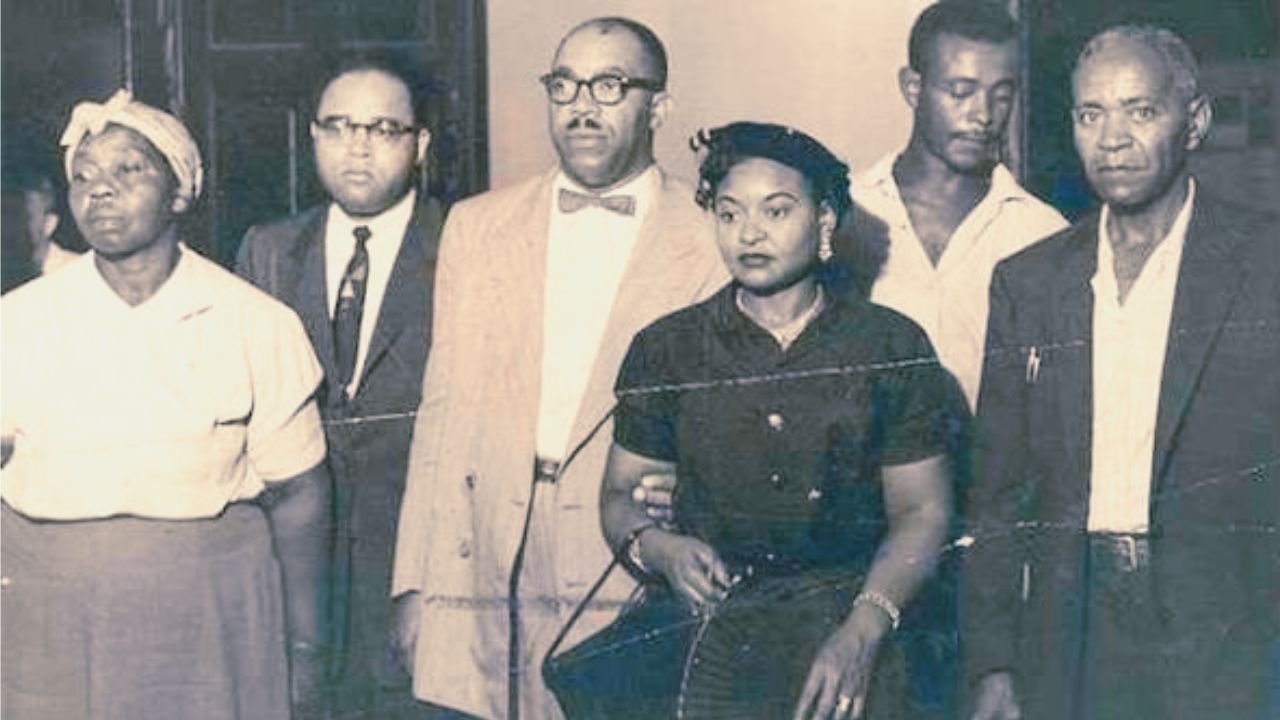
When people search for John Carthan, they are almost always looking for one thing — his connection to Emmett Till. Emmett’s 1955 murder in Mississippi became one of the most significant moments in American civil rights history, and the family around him has drawn serious attention ever since.
John Carthan was not a civil rights leader or a public figure in the traditional sense. He was a father, a grandfather, and a man whose family story helps explain how the Till family came to be where they were. This article covers who he was, his background, his move north, and his quiet but real presence during one of American history’s most painful chapters.
Who Was John Carthan?
His full name was Wiley Nash “John” Carthan, and he was born in 1902. Depending on where you look, you may see him listed as “John Carthan,” “Wiley Nash Carthan,” or “Wiley Nash ‘John’ Carthan.” These are all names associated with the same person, so readers searching genealogy records should not treat them as different individuals.
John Carthan was the father of Mamie Elizabeth Carthan, who later became known to the world as Mamie Till-Mobley. Through Mamie, he was Emmett Till’s maternal grandfather. That specific relationship — maternal grandfather, not father — is worth stating clearly, because his name sometimes appears in ways that can cause confusion.
He should also not be confused with his brother, Emmett Carthan, or other relatives who share the Carthan surname. Family records from this period can be difficult to navigate, and cross-referencing against established institutional sources is always the safer approach.
His Family and Mississippi Roots
John Carthan was born in Mississippi in 1902. Exact details about his birthplace vary across different records, so those specifics should be treated carefully rather than stated with absolute certainty.
He married Alma Smith Carthan, and together they had one child — Mamie. Biographical sources confirm that Mamie was their only child. The family’s story, at least in its early chapters, was a small and tight unit: a husband, a wife, and one daughter growing up in the South.
John and Alma’s marriage did not last. The two separated or divorced during the 1930s while Mamie was still young. After the separation, John’s relationship with Mamie became somewhat estranged over the years, though he remained a part of the broader family picture. It would not be accurate to describe them as a close, intact family throughout Mamie’s childhood.
From Mississippi to Argo, Illinois
Around 1922, John Carthan left Mississippi and moved to Argo, Illinois, a small town near Chicago. Alma and young Mamie followed in 1924. This was not an unusual decision for African American families at the time — it was, in fact, part of one of the largest population movements in American history.
The Great Migration brought hundreds of thousands of Black Americans out of the rural South between roughly 1910 and 1970. Many were escaping Jim Crow laws, racial violence, and economic poverty. Cities and towns near Chicago, including Argo, offered industrial jobs and, relatively speaking, more safety than the Deep South.
In Argo, John found work at the Corn Products Refining Company, a major local employer that hired many African American workers. This kind of steady industrial employment was part of what drew migrants north. Institutional sources including the National Park Service and Encyclopaedia Britannica both confirm his employment there.
This northward move shaped everything that followed. It placed Mamie in an environment where she could build a life, and it was in the Chicago area that Emmett Till was eventually born and raised. When Emmett traveled south to Mississippi in the summer of 1955 to visit relatives, it was from this northern home base that his journey began.
John Carthan’s Role During the 1955 Trial
In August 1955, fourteen-year-old Emmett Till was abducted and murdered in Money, Mississippi. The case drew national and international attention, and the trial of the accused men became a flashpoint in the civil rights movement.
John Carthan accompanied Mamie to Mississippi for the murder trial. He did not witness the murder — his connection is to the aftermath, specifically the trial and the family support surrounding Mamie during that period. Records from the Emmett Till Exhibit also place him at Emmett’s burial service in 1955.
His role during this time was that of a grieving family member. He was there to support his daughter through something no parent should ever have to face. He was not a civil rights organizer or a spokesperson. He simply showed up for Mamie when she needed her family around her.
That kind of quiet presence does not always make it into history books, but it matters. The people who stood beside Mamie during the worst weeks of her life were part of how she found the strength to do what she did — including her decision to hold an open-casket funeral so the world could see what had been done to her son.
John Carthan in the 2022 Film Till
The 2022 feature film Till brought the story of Mamie Till-Mobley to a wide audience. The film focuses on Mamie’s response to her son’s murder and her determination to seek justice. John Carthan appears as a character in the film, portrayed by actor Frankie Faison. Whoopi Goldberg plays Alma Carthan.
As with any dramatized historical film, it is important to separate the movie from the documented record. Some scenes may be compressed or reimagined for storytelling purposes. The film is a starting point for understanding the family, not a substitute for the historical biographies and institutional research that cover the actual events.
If you came to John Carthan’s name through the film, that is a perfectly reasonable path. Just keep in mind that the documented facts — his employment, his migration north, his presence at the trial — come from sources like the National Park Service, Encyclopaedia Britannica, and the Emmett Till History project, not from the screenplay.
His Later Years and Death
Public information about John Carthan’s later life is limited. He lived in the Chicago area for decades after the events of 1955. According to available biographical material, he died in January 1969 in Summit, Illinois, while visiting relatives — including, reportedly, his brother Emmett Carthan.
His life did not generate the kind of documentation that Mamie’s did. She became a teacher, an activist, and eventually the author of a memoir. John remained, as he had largely been throughout his adult years, a figure in the background of a much larger story.
That does not diminish his place in it. His decision to move north in 1922 set the conditions for Mamie’s upbringing and, eventually, for Emmett’s life in Chicago. His presence at the trial showed that even an estranged relationship between a father and daughter can still carry weight in a moment of crisis.
Why John Carthan’s Story Still Matters?
John Carthan is not a household name. Most people who search for him do so because they are trying to understand Emmett Till’s family — who they were, where they came from, and how their lives connected to one of the defining moments of the civil rights era.
His story reflects a pattern shared by millions of African American families in the twentieth century. The move from Mississippi to Illinois. The industrial job in a northern town. The fractured family structure shaped by the pressures of that era. These details are historically familiar, but they also belonged to real people.
For readers who want to go deeper into the history surrounding the Till case, resources like those covered at Vision of Business and dedicated civil rights archives offer broader context for understanding how individual family stories connect to larger national moments.
John Carthan — Wiley Nash “John” Carthan — was Emmett Till’s maternal grandfather. He was a Mississippi-born man who moved north during the Great Migration, worked in an Illinois factory, and showed up for his daughter when the world was watching. That is his place in the story, and it is a real one.
Also Read: